Custom AI agent · Finance
AI Accounts Receivable Follow-Up Agent for SaaS Companies
Bring subscription invoices and payment exceptions into one finance review queue.
Organize SaaS invoices against subscription periods, approved usage records, proration and posted payments, with billing discrepancies and account changes routed for finance review.
- Subscription invoices aligned with recorded billing periods and plan references
- Usage, proration and credit discrepancies surfaced for review
- Failed or partial payment records routed with account context
Starting at $300 USD/month
Starting price is $300 USD/month for a tailored solution. Your proposal defines the workflow, deliverables and payment terms. Billing-platform, product-analytics, CRM or accounting integrations, account volume, hosting and ongoing support are scoped before work begins.
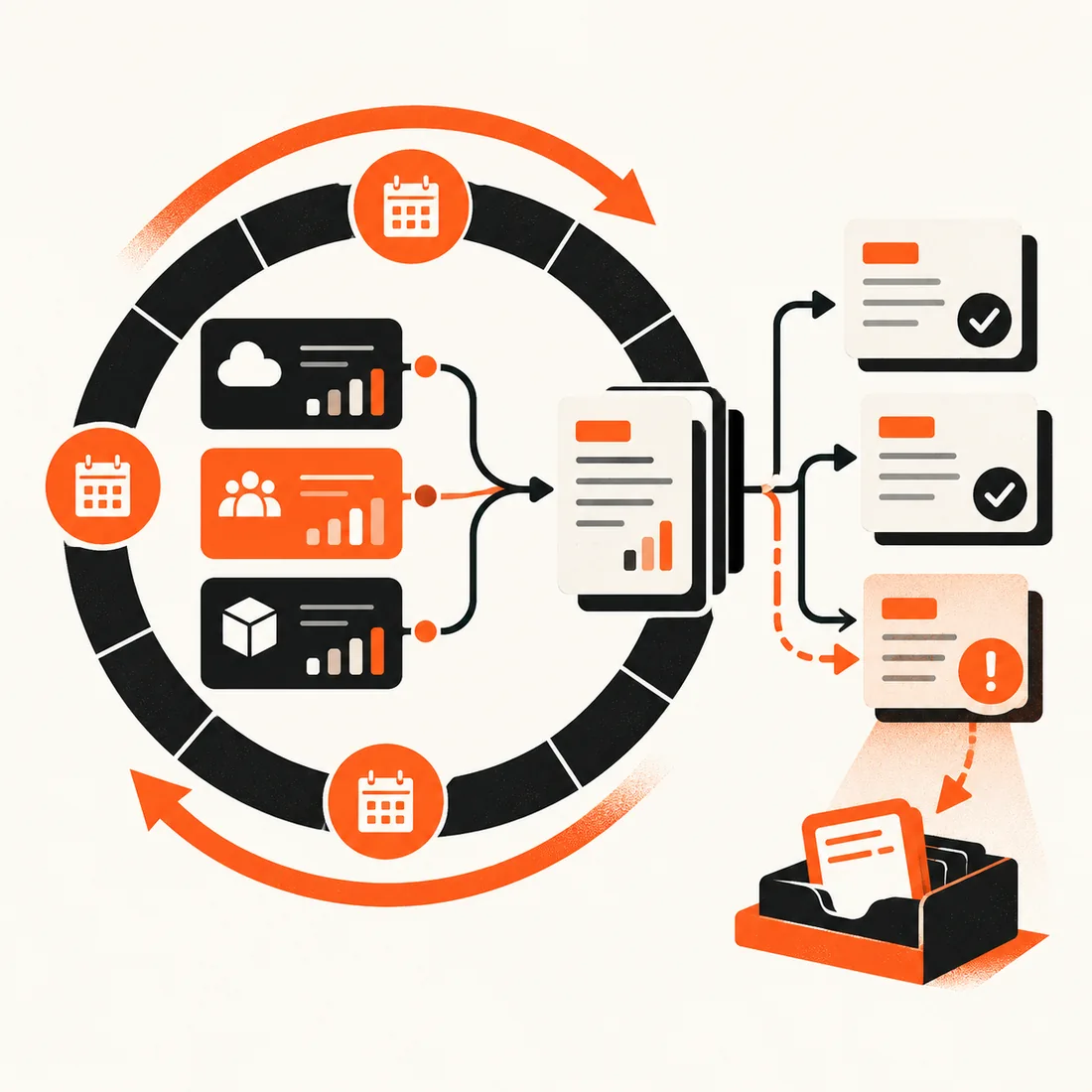
What is an AI accounts receivable follow-up agent for SaaS companies?
SaaS receivables can combine monthly and annual plans, mid-cycle upgrades, prorated changes, metered usage, approved credits and payment records across a billing platform and accounting ledger. A finance team may need to explain why a renewal invoice differs from the previous period or investigate a partial payment without treating every balance as a routine reminder. This agent organizes source-reported invoice, subscription-period, usage and payment references into an exception-aware review queue. It can surface mismatched account IDs, missing usage approvals, unusual proration entries or recorded credits that need confirmation. It does not decide whether a customer is entitled to a plan, whether a charge is valid, or whether an account should be downgraded or cancelled. Finance verifies the ledger and billing rules before approving any customer-facing action.
What it can organize across SaaS receivables
Align invoices with subscription periods
Group invoice references by account, plan, renewal date, billing cadence and source-reported subscription status. Flag a missing period or account mismatch for finance to check in the billing platform.
Surface usage and proration exceptions
Compare approved usage exports and recorded plan changes with invoice line references, then flag missing approvals, unexpected period boundaries or a quantity that does not reconcile to the configured source. Staff validate the meter, rate and billing rule.
Organize payment and credit records
Bring source-reported full, partial or failed payment statuses and recorded credits into the account review timeline. Finance reconciles settlement and confirms whether a credit or adjustment was approved.
Prepare context-aware follow-up queues
Sort verified balances by due date, renewal period, account owner and recorded billing exception. Hold disputed usage, pending cancellation requests or open billing tickets for the designated reviewer.
Where it can help
Reviewing an annual renewal after a plan change
Compare the invoice period and plan reference with a recorded mid-cycle upgrade or downgrade. Flag a proration discrepancy for billing operations to verify before finance approves a customer explanation.
Reconciling a metered-usage invoice
Match a source-reported usage total to the approved usage export and billing-period boundary. Route missing meter data or a customer dispute for review instead of asserting that the amount is correct.
Following up on a partial payment
Show the invoice balance alongside posted settlement references and any approved credit record. Finance confirms the accounting ledger and decides whether follow-up is appropriate.
How it works
A step-by-step workflow your team can review before launch.
Choose the billing and accounting sources
Select approved invoice, subscription, usage and payment exports. Identify which platform is authoritative for account status, billing period, balance and posted settlement.
Map plan and invoice references
Document account IDs, plan and cadence fields, renewal dates, invoice periods, usage records, plan-change timestamps, credits and named finance owners.
Build a dated exception queue
Preserve source references and export dates while flagging account mismatches, unapproved usage, proration questions, partial settlements, open billing tickets and pending account requests.
Approve account follow-up
Billing operations verifies plan and usage rules; finance reconciles the ledger and approves any customer message, payment-status change or account adjustment.
Built around your business
What we configure
- Billing platform and accounting export fields
- Account, subscription, plan, cadence and invoice-period identifiers
- Metered-usage sources and approval references
- Plan-change, renewal, proration and credit status fields
- Partial settlement and payment-failure review rules
- Named billing operations and finance reviewers
What we need from you
- Sanitized invoice, subscription and payment export samples
- A source-of-truth owner for invoice balance, subscription status and settlement
- Documented usage-meter and proration rules with an accountable approver
- Current definitions for credits, cancellations, disputes and account ownership
- Named billing and finance reviewers for exceptions and outreach
- Role-based access and a data-minimization plan for customer records
Clear boundaries before launch
What it will not do
This agent organizes SaaS billing and receivables records. It does not decide whether a subscription is active, interpret plan terms, validate a usage meter, determine whether a charge or credit is contractually valid, change a plan, cancel or renew an account, retry a payment, charge a payment method, create or alter an invoice, apply a credit, waive a balance, assess collection fees or independently contact customers. A failed-payment status is not proof that a charge should be retried, and a usage total is not proof of customer approval. Billing operations verifies plan and usage rules; finance reconciles the ledger and approves every external communication or account change. Customer contracts, privacy requirements and applicable payment and collection obligations remain the company's responsibility.
How success is measured
Review sample queue items against dated subscription records, approved usage exports, plan-change events, credit approvals and accounting postings. Track missing account or period references, unapproved usage, proration questions, partial-payment mismatches, open billing disputes, duplicate follow-ups and staff time spent reconciling billing sources. Measure administrative record completeness separately from recurring revenue, churn, expansion, collection rate or customer retention.
Frequently asked questions
What does an AI accounts receivable follow-up agent do for a SaaS company?
It organizes invoice, subscription-period, usage and payment records for finance review and routes discrepancies to the appropriate owner. Your team verifies charges, balances and customer communications.
Can it calculate or approve usage-based charges?
It can compare source-reported usage references with an approved export and flag differences. Billing operations must verify the meter, rate, billing period and customer terms before approving an amount.
How does it handle proration after a plan change?
It can surface invoice periods and recorded plan-change dates for review. It does not determine whether a proration is correct; your team checks the billing rules and approves any adjustment.
Will it retry failed payments or change a subscription?
No. It can organize a source-reported failure status and related invoice context. Authorized staff decide whether to contact the customer or take any payment or subscription action.
Can it connect to our billing platform and accounting system?
A connection can be scoped after reviewing the platforms, available exports or APIs, permissions and required review controls. Integrations are not automatically included in the starting price.
What does the $300/month starting price include?
Tranki solutions start at $300 USD/month. Your tailored proposal defines the workflow, deliverables and payment terms. Integrations, account volume, hosting and ongoing support are scoped before work begins.
What should we prepare before scoping a SaaS billing workflow?
Sanitized invoice and payment exports, subscription and plan-change records, approved usage samples, credit rules and the names of billing and finance reviewers are useful starting materials.