Custom AI agent · Finance
AI Duplicate Invoice Detection Agent
Catch duplicate invoices before they become duplicate payments.
Screen invoices for likely duplicates, explain matching evidence and route exceptions before payment approval.
- Compare invoice signals across sources and vendors with consistent rules.
- Separate likely duplicates from legitimate recurring or corrected invoices.
- Give accounts payable reviewers the evidence needed before approval.
Starting at $300 USD/month
Starting price is $300 USD/month. Your final proposal depends on invoice volume, source systems, matching rules, integrations, review controls and ongoing support.
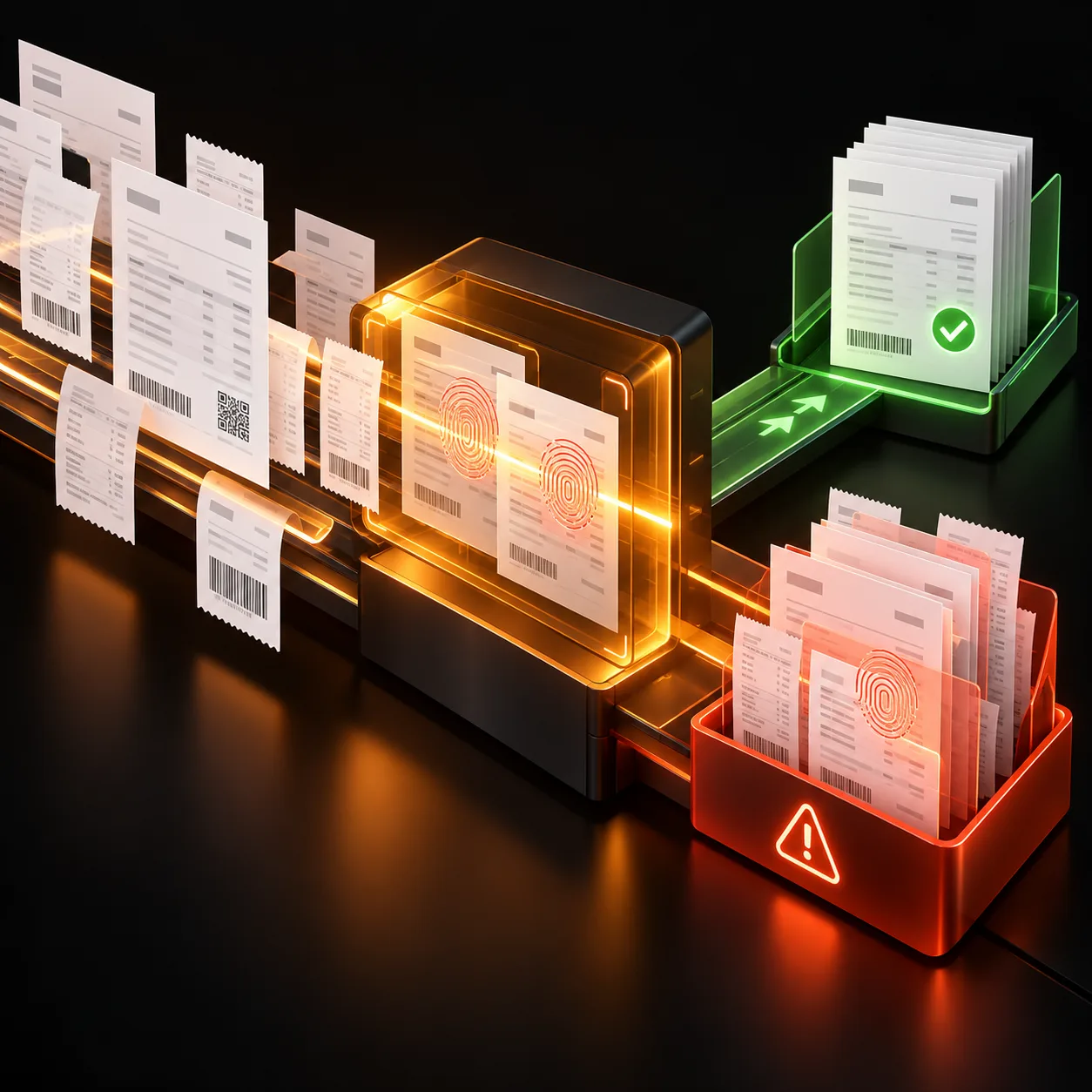
What is an AI duplicate invoice detection agent?
An AI duplicate invoice detection agent screens approved invoice and payment records for repeated or conflicting submissions. It compares invoice numbers, vendors, amounts, dates, line items, purchase orders, documents and other permitted signals while accounting for credits, recurring billing and legitimate corrections. Tranki configures the workflow to flag risk without blocking valid payments or deleting records automatically.
What it can detect
Compare invoice fingerprints
Match approved identifiers, vendor details, amounts, dates, line items, documents and payment references across source systems.
Handle near-duplicates
Surface formatting changes, split invoices, resubmissions, amended documents and similar records using configurable signals.
Distinguish valid repeats
Use recurring-billing, credit, correction, installment and purchase-order rules to avoid treating every repeat as fraud.
Route evidence-based exceptions
Present linked records, match reasons and confidence signals to accounts payable reviewers before approval.
Where it can help
Invoice intake screening
Check invoices from email, portals, procurement systems or uploads before they reach the approval queue.
Payment-run controls
Review likely duplicates and unresolved exceptions before an approved batch moves toward payment.
Vendor master and history review
Compare new submissions with vendor history, prior invoices and related purchasing evidence.
How it works
A step-by-step workflow your team can review before launch.
Define duplicate policy
Agree on exact and fuzzy signals, legitimate repeat patterns, materiality, review thresholds and response owners.
Collect approved records
The agent loads invoices, payments, purchase orders and supporting documents within the defined permission boundary.
Score possible duplicates
It compares records, documents the evidence and separates likely matches from expected recurring or corrected activity.
Review and resolve
Accounts payable owners confirm, reject or defer each exception before a payment or accounting workflow proceeds.
Built around your business
What we configure
- Invoice, payment, purchase-order, vendor, receiving and contract sources with field mappings.
- Exact, fuzzy, document, amount, date, line-item and reference matching rules with thresholds.
- Recurring billing, credit memo, installment, correction, currency and split-invoice exceptions.
- Review queues, payment holds, evidence reports, approval routing and ERP or AP integrations.
What we need from you
- Representative invoice and payment records containing known duplicates, near-duplicates and valid repeats.
- Approved definitions for duplicate, correction, credit, recurring invoice and acceptable tolerance.
- A list of source systems, permissions and the workflow boundary before payment approval.
- Named reviewers responsible for resolving exceptions and maintaining matching rules.
Clear boundaries before launch
What it will not do
The agent does not prove fraud, block or release payments without authorization, delete records or treat a similar amount as proof of duplication. Suspected fraud, vendor risk, tax and high-value payment decisions require qualified finance, security or compliance review. Invoice, vendor and bank data must follow your access, retention and audit controls.
How success is measured
Measure duplicate-detection precision, missed-duplicate rate, false-positive rate, reviewer agreement, exception resolution time, payment holds avoided, manual screening time and post-payment corrections.
Frequently asked questions
What signals can it use to find duplicate invoices?
It can compare invoice numbers, vendors, amounts, dates, line items, purchase orders, documents, payment references and other approved fields.
Will it block payments automatically?
Not by default. It can flag or hold a record through an authorized workflow, but payment decisions remain under your finance controls.
How does it avoid flagging recurring invoices?
Recurring billing, installments, credits and approved corrections can be defined as legitimate patterns with their own matching rules.
Can it detect invoices with changed numbers?
It can use multiple approved signals, such as vendor, amount, date, line items and document similarity, to surface possible matches even when identifiers change.
Can it check invoices before they reach approval?
Yes, the screening step can be placed at intake, before approval or before a payment run depending on your source and integration workflow.
Does a match mean fraud?
No. A match is a review signal, not a fraud conclusion. Finance, security or compliance owners must investigate and decide the appropriate response.
What does the $300 USD/month starting price include?
It is a starting point for a tailored solution. Final pricing depends on invoice volume, sources, matching complexity, review controls, integrations, hosting and support.