Custom AI agent · Finance
AI Invoice Data Extraction Agent for Auto Parts Retailers
Turn parts invoices into records your team can verify.
Organize auto parts supplier invoices by SKU, pack size, core charge and purchase reference, with source links and review flags for price or quantity differences.
- Capture supplier, invoice, PO reference, SKU or part number, pack quantity, unit cost, discounts, core charges, freight, tax and due date when present.
- Organize invoice lines for brakes, filters, belts, electrical components, ignition parts and other configured inventory categories.
- Flag missing purchase references, unit or price variances, uncertain part-number matches and possible duplicate invoices for human review.
Starting at $300 USD/month
Custom implementation starts at $300 USD per month. Final pricing depends on monthly invoice volume, supplier variation, SKU mapping, branch routing, integrations and support requirements.
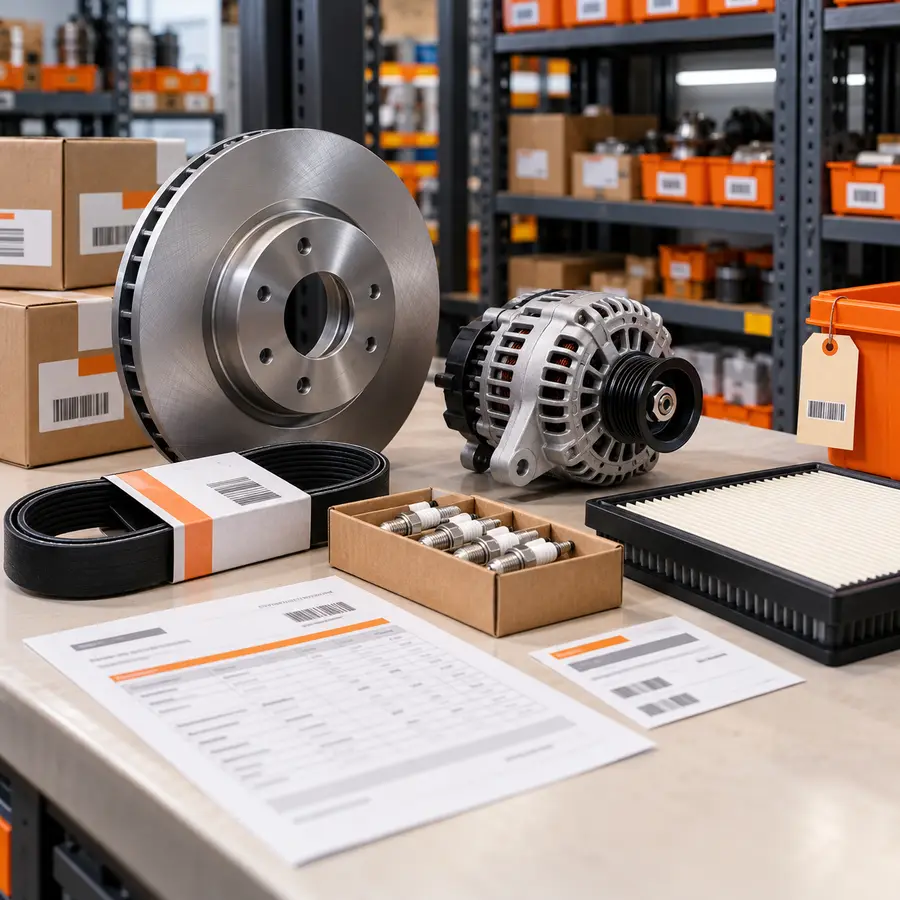
What is an AI invoice data extraction agent for auto parts retailers?
Auto parts retailers receive invoices with manufacturer and aftermarket part numbers, interchangeable references, core charges, pack quantities, freight, discounts and supplier-specific descriptions. This AI invoice data extraction agent captures the fields your finance and purchasing teams select, links extracted values to their source documents and can compare invoice lines with approved purchase orders or catalog references supplied by your business. It flags uncertain part matches, unit differences and pricing variances for staff review so records are easier to reconcile across suppliers and branches. The workflow handles vendor invoice information; it does not determine vehicle fitment, confirm physical stock receipt, approve payments or replace your parts catalog.
Parts invoice intake and reconciliation
SKU and supplier field capture
Extract supplier identifiers, invoice references, SKU or manufacturer part numbers, descriptions, quantities, units and dates from supported invoice formats.
Pack, core and charge handling
Represent case packs, quantity units, refundable core charges, freight, discounts, credits and tax as separate reviewable fields when shown.
Purchase-reference comparison
Compare selected invoice fields with purchase orders, supplier lists or parts references provided by your business; keep source links for verification.
Exception and duplicate review
Surface possible number mismatches, price changes, missing PO links, unclear quantities and duplicate candidates for staff disposition.
Where it can help
Brake and suspension suppliers
Structure rotors, pads, calipers, bearings and suspension component invoices, including configured part numbers and pack quantities.
Filters and maintenance parts
Organize oil, air and cabin filters, belts, hoses and service items by supplier SKU, unit and invoice reference.
Electrical and ignition inventory
Capture invoice lines for alternators, starters, batteries, sensors, spark plugs and ignition components using the retailer's chosen fields.
Multi-branch purchasing
Route vendor bills to the selected store or purchasing queue when a branch or delivery reference is present and configured.
How it works
A step-by-step workflow your team can review before launch.
Choose invoice sources
Select the supplier inboxes or repositories and the branch or finance queues included in the agreed rollout.
Map parts and units
Provide supplier aliases, SKU conventions, pack definitions, core-charge treatment and approved purchase references.
Review real invoice samples
Configure extraction against representative invoices, credits, backorders, split shipments and supplier-specific layouts.
Route records and exceptions
Send agreed fields to the selected finance workflow while holding uncertain matches, variances and duplicate candidates for employee review.
Built around your business
What we configure
- Field schema for vendor, invoice and PO references, SKU/part number, description, quantity, pack, unit cost, discount, core, freight, tax and due date.
- Supplier-specific aliases and catalog mappings for OEM and aftermarket references supplied by the retailer.
- Optional connections to accounting, purchasing, inventory or point-of-sale systems, subject to access and integration scope.
- Review rules for price variances, pack-size differences, uncertain part-number matches, missing PO references and duplicate candidates.
What we need from you
- Representative invoices and credit memos from the retailer's parts distributors and manufacturers.
- Approved supplier aliases, SKU/part-number references, pack and unit rules, PO examples, and target finance fields.
- A purchasing or finance owner to validate mappings, exception thresholds and the staff approval path.
Clear boundaries before launch
What it will not do
The agent extracts information displayed in supported supplier documents and compares it only with business references provided and configured. It does not independently verify vehicle compatibility or physical delivery, assess part safety or condition, determine whether an alternative part is acceptable, approve purchase orders or payments, make accounting or tax determinations, or update inventory without a separately scoped and authorized workflow. Staff review substitutions, unclear numbers, core credits, price variances and duplicate candidates before records are finalized.
How success is measured
Evaluate field-level accuracy on a staff-reviewed sample of invoices, correct capture of SKU and pack units, agreement with approved purchase references, exceptions by supplier, duplicate candidates confirmed by staff and time from invoice receipt to finance review. Results depend on document quality and the completeness of supplier and catalog references.
Frequently asked questions
Can it identify whether a part fits a specific vehicle?
No. It can capture part numbers and compare them with references you provide, but it does not independently determine vehicle fitment. Staff should verify compatibility in the retailer's approved catalog.
Can it handle OEM and aftermarket part numbers?
The extraction schema can capture both when present. Cross-referencing depends on the aliases and approved mappings supplied by your business; ambiguous matches are flagged for review.
How are core charges and returns treated?
They can be captured as separate invoice fields when stated by the supplier. Your team defines how credits, returned cores and deposits flow into its accounting process.
Can it compare invoices with purchase orders?
Yes, if purchase order data and an agreed integration or reference file are available. The agent can surface differences for staff approval; it does not authorize payment.
Does it update inventory when an invoice arrives?
Invoice processing alone does not confirm physical receipt or update stock. Any inventory connection and receiving controls must be separately scoped and approved.
What is the starting price?
Custom implementation starts at $300 USD per month. Final pricing depends on invoice volume, supplier formats, catalog mapping, integrations and support requirements.
Which accounting or inventory systems can connect?
Potential integrations are evaluated after reviewing your systems, available permissions and data formats. Supported scope and fees are documented in your proposal.