Custom AI agent · Finance
AI Invoice Data Extraction Agent for Ecommerce Stores
Make ecommerce vendor bills easier to capture, compare and review.
Capture ecommerce supplier and fulfillment invoice details, compare supplied SKU and purchase references, and route exceptions for human AP review.
- Structure supplier, fulfillment, shipping and platform charges with their source documents
- Surface missing purchase references and configured price or quantity differences for review
- Route clear exceptions to finance while keeping invoice approval under your team's control
Starting at $300 USD/month
Starting price is $300 USD/month for a tailored solution. Your written proposal defines vendor and document volume, supported invoice formats, SKU and PO mappings, comparison rules, marketplace or fulfillment statements, integrations, hosting, support and payment terms. Additional usage and services are scoped separately.
What is an AI invoice data extraction agent for ecommerce stores?
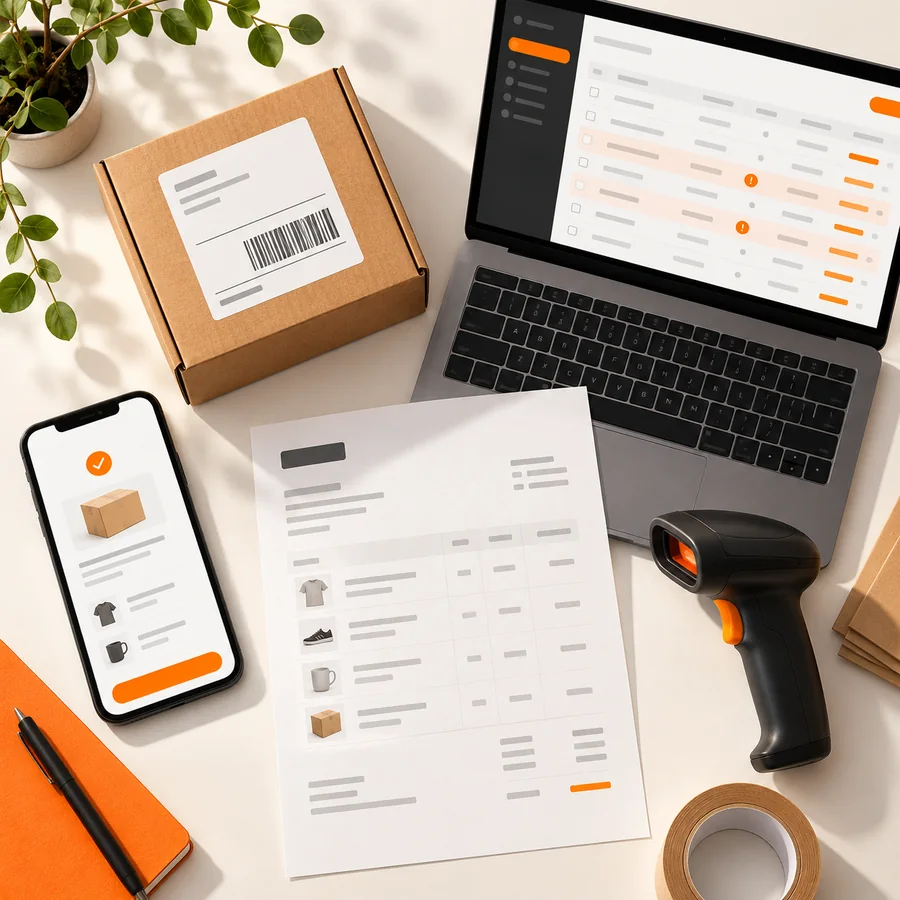
Ecommerce finance teams receive a mix of inventory supplier invoices, packaging bills, third-party fulfillment charges, carrier statements, marketplace or payment fees, and recurring software expenses. This tailored AI agent extracts agreed header and line-item data from supported documents, organizes it by vendor, period, SKU or purchase reference when supplied, and prepares exceptions for accounts-payable review. Comparisons use only the purchase orders, receiving records, rate cards or statements your team provides and approves.
Invoice workflows built for ecommerce operations
Extract supplier invoice fields and line items
Capture vendor, invoice number, dates, billing period, currency, subtotal, tax, total, SKU or item description, quantity, unit price and freight fields from supported formats.
Organize bills by product and purchase reference
Use approved vendor aliases, SKU mappings, PO identifiers and receiving references when those details appear in the invoice or supplied records.
Flag configured quantity and price differences
Compare supported line items with PO, receiving or rate data you provide and surface missing references, possible duplicates and configured variances for review.
Prepare traceable finance exceptions
Return structured invoice data with the source document and exception reason so AP can verify the record before posting, approval or payment.
Where it can help
Inventory and product supplier invoices
Capture vendor, invoice, dates, currency, item descriptions, SKUs, quantities, unit prices, taxes and totals from supported stock-purchase documents; flag differences against supplied purchase orders or receiving records.
Packaging and shipping supply bills
Organize packaging, labels, inserts and shipping-material invoices by vendor, product code, quantity and approved purchase reference for review by ecommerce operations or AP.
Third-party fulfillment and carrier charges
Structure 3PL, pick-and-pack, storage, postage and carrier bills by billing period and available order, shipment or service references; send configured fee differences to a reviewer.
Marketplace, payment and ecommerce software costs
Capture fees and subscription charges from supported invoices or statements, preserving platform, account, period and currency fields. Keep settlements distinct from vendor invoices when your accounting workflow requires it.
How it works
A step-by-step workflow your team can review before launch.
Collect supported bills and reference records
Receive supplier and service-provider invoices through an agreed AP inbox, shared folder or authorized integration. Provide only the purchase orders, receiving exports, rate cards or platform statements needed for the comparisons in scope.
Extract invoice headers and item lines
Capture configured vendor, invoice number, issue and due dates, currency, SKU or item description, quantity, unit price, freight, tax and total from supported formats.
Apply vendor, SKU and purchase mappings
Normalize approved vendor aliases and product references. Compare invoice details with supplied PO, receiving, fulfillment or carrier records where agreed, leaving uncertain matches for staff instead of guessing.
Route exceptions for finance review
Present each extracted record with its source document and a clear reason for missing references, duplicate indicators or configured price and quantity variances before AP staff post or pay.
Built around your business
What we configure
- Vendor formats, invoice fields, currencies, item descriptions, SKUs and units of measure
- Mappings across ecommerce brands, sales channels, warehouses, suppliers and accounting entities
- PO, receiving, fulfillment and carrier comparisons using reference data supplied by your team
- Rules for duplicate checks, quantity or unit-price variances, taxes, credits and exception ownership
- AP inbox, accounting, ERP, ecommerce or 3PL integrations explicitly included in the proposal
What we need from you
- Representative supplier, fulfillment and carrier bills with customer personal data removed
- Vendor directory, approved aliases, SKU catalog and purchase-order conventions
- Receiving, fulfillment, rate or platform exports needed for the specific comparisons requested
- Supported document formats, expected monthly volume and retention requirements
- Finance and ecommerce operations owners to approve mappings, variance rules and exception routing
Clear boundaries before launch
What it will not do
This workflow extracts and organizes supported invoices and statements; it can compare them only with reference data supplied by your team or integrations explicitly included in the proposal. A captured SKU or quantity is not proof that goods were received or correctly valued. The agent does not place purchase orders, change inventory, approve bills, release payments, determine sales tax, calculate margins or decide accounting treatment. Marketplace settlement files and supplier invoices are different source types and must be mapped separately where applicable. Finance staff must verify each exception and approve records using existing controls. Remove unnecessary customer personal data from samples and exports.
How success is measured
Evaluate an approved representative sample for invoice header and line-item accuracy, SKU and unit capture, vendor and entity mapping, PO and receiving reference matches, configured price or quantity variance flags, duplicate detection, exception precision, staff corrections and AP review time. Preserve each source document and set acceptance thresholds with finance and ecommerce operations.
Frequently asked questions
Which ecommerce invoices can it process?
It can be configured for supplier invoices, inventory purchases, packaging, third-party fulfillment, shipping carriers and recurring software or advertising bills. Supported vendors, formats and document volume are defined during scoping.
Can it match supplier bills to purchase orders and received goods?
It can capture PO, SKU, shipment and receiving references included in your documents and compare them with records your team supplies. Missing references, quantity differences and price variances are routed for staff review; the source records determine what can be checked.
Can it handle invoices from multiple marketplaces or payment providers?
Where supported statements or invoices are provided, the workflow can capture configured fees, periods, currencies and account references. Marketplace settlements and payment statements may use different formats and need separate mappings in scope.
Will it update inventory or accounting records automatically?
Not by default. It prepares structured invoice data and exceptions for review. Any ERP or accounting connection must be separately scoped, authorized and tested; staff remain responsible for approving records.
Does it calculate sales tax, margins or cost of goods sold?
No. It extracts supplied tax and line-item values but does not determine tax obligations, inventory valuation, landed cost or accounting treatment. Your finance team validates these decisions.
What does the $300 monthly starting price include?
Tranki solutions start at $300 USD per month. Your proposal defines vendor and document volume, supported formats, SKU and PO mappings, integrations, hosting, support and payment terms.
How can we evaluate extraction quality?
Review a representative, approved set of original invoices and trusted PO or receiving records. Measure header and line-item accuracy, SKU and reference capture, variance flags, corrections, exception routing and AP review time.