Custom AI agent · IT & Security
AI Security Alert Triage Agent
Turn security alerts into clear, evidence-linked decisions.
Turn security alerts into focused, evidence-linked triage queues with context, ownership, and analyst review.
- Less time spent sorting duplicate or low-context alerts
- Faster assignment with asset, identity, and timeline context
- A reviewable path from alert signal to response decision
Starting at $300 USD/month
Starting price for a tailored solution. Your final proposal defines alert sources, enrichment, integrations, delivery scope, and ongoing support.

What is an AI security alert triage agent?
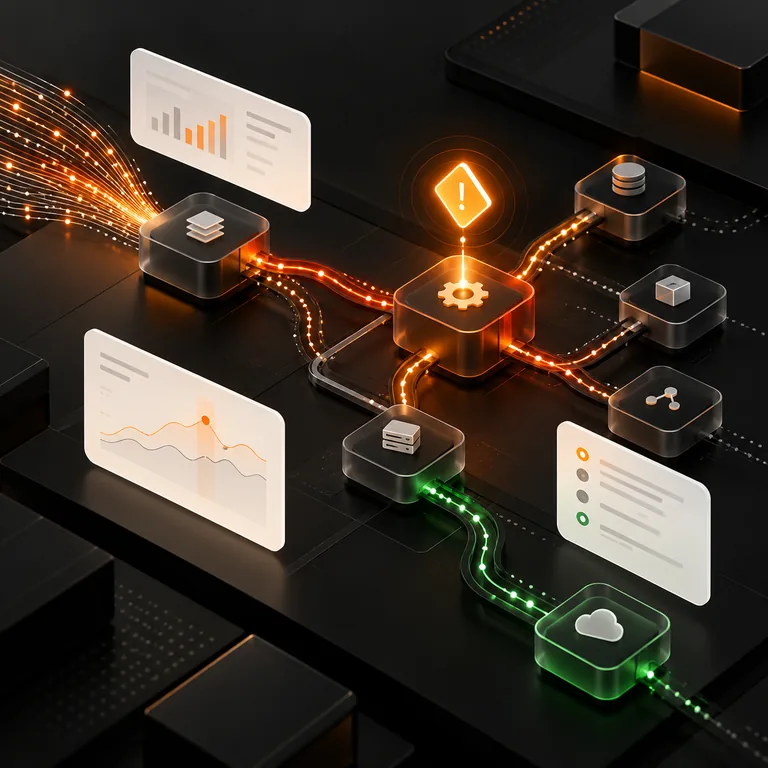
This custom AI security alert triage agent helps security operations teams turn incoming detections into focused, contextualized queues. It groups related alerts, enriches them with approved identity and asset context, highlights missing evidence, and routes likely cases to the right analyst. The agent supports prioritization and documentation without declaring a breach or replacing human investigation.
What the agent can triage
Alert normalization and grouping
Consolidates related detections across approved sources and reduces repeated signals into an understandable event story.
Context enrichment
Adds permitted asset, identity, environment, ownership, timing, and change context so analysts can assess relevance faster.
Risk-aware prioritization
Applies your severity, exposure, confidence, and business-impact rules while clearly labeling uncertainty and missing evidence.
Analyst-ready routing
Creates a reviewable triage record with evidence links, recommended next steps, ownership, and escalation boundaries.
Where it can help
Security operations queues
Prioritize endpoint, identity, network, cloud, and application alerts across the environments your team monitors.
Detection engineering feedback
Identify noisy rules, recurring false positives, missing enrichment, and alert patterns that need tuning or better coverage.
Managed security handoffs
Give internal or external analysts a consistent alert summary, evidence trail, ownership path, and decision history.
How it works
A step-by-step workflow your team can review before launch.
1. Define alert policy
Tranki maps approved detection sources, severity logic, assets, identities, owners, response roles, retention, and prohibited actions.
2. Gather evidence
The agent reads permitted alert and context sources while preserving timestamps, source links, rule details, and data-handling boundaries.
3. Group and prioritize
It correlates related signals, adds relevant context, highlights gaps, and ranks cases according to your documented triage model.
4. Review and respond
An authorized analyst validates the evidence, assigns the case, tunes or escalates the signal, and records the decision.
Built around your business
What we configure
- alert sources, detection rules, severity, confidence, asset and identity context, ownership, enrichment, retention, and escalation policy
- connections to approved SIEM, EDR, IAM, cloud, ticketing, vulnerability, asset, and incident systems using least-privilege access
- redaction, grouping windows, analyst queues, exception handling, evidence links, audit fields, reporting, and review reminders
What we need from you
- representative alerts, detection and response policies, asset and identity context, approved source connections, analyst roles, and examples of useful and noisy signals
- test cases covering duplicates, low-confidence detections, privileged identities, exposed assets, impossible travel, cloud changes, false positives, and incomplete evidence
Clear boundaries before launch
What it will not do
The agent does not confirm a breach, disable controls, quarantine systems, contact users, or execute response actions solely from an alert score. It does not expose secrets or restricted context beyond your access rules, and high-impact security decisions require an authorized analyst.
How success is measured
Track time to triage, duplicate reduction, alert-to-case precision, analyst acceptance, owner assignment, enrichment coverage, false-positive rate, evidence-link completeness, escalation quality, and human correction rate.
Frequently asked questions
What does a security alert triage agent do?
It groups related alerts, adds permitted context, applies your prioritization rules, and routes reviewable cases to the appropriate analyst or workflow.
Does it replace our SIEM or security tools?
No. It works alongside your existing detection and response stack to improve context, queue quality, and handoffs.
Can it decide whether an alert is a breach?
It can prioritize evidence and suggest investigation paths, but an authorized security professional must validate high-impact conclusions and response decisions.
Which alert sources can it connect to?
We scope approved SIEM, endpoint, identity, cloud, vulnerability, asset, ticketing, and incident sources according to your permissions and retention rules.
How does it reduce false positives?
It groups repeated signals, applies context-aware rules, records analyst feedback, and surfaces noisy detections for tuning rather than silently discarding them.
Can it handle sensitive security data?
Yes. Least-privilege access, redaction, retention, source boundaries, and audit controls are designed into the workflow.
What is the starting price?
Projects start at $300 USD/month. The final proposal reflects integrations, usage, hosting, scope, and ongoing support.