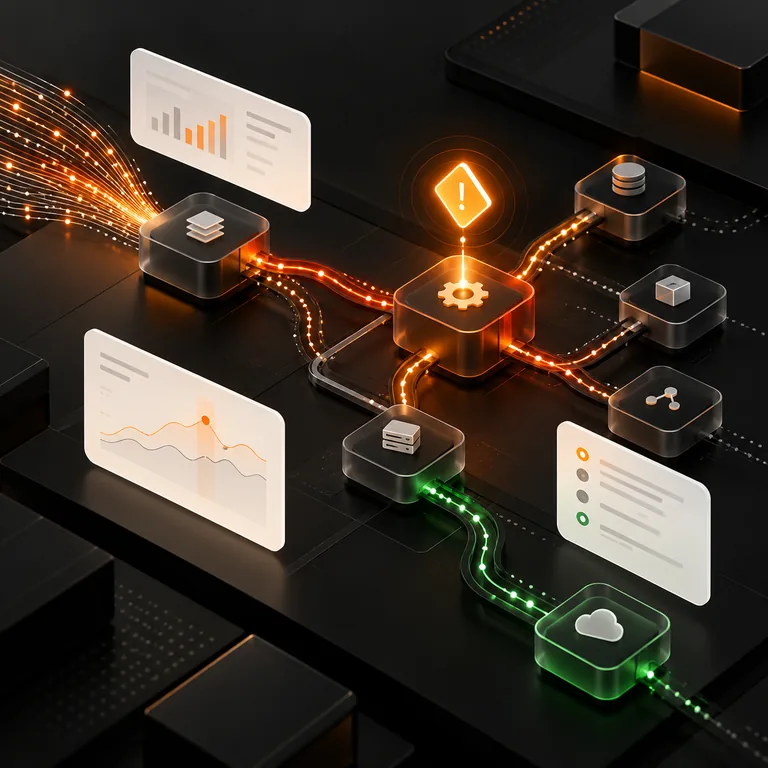
AI API Incident Triage Agent
Turn noisy API failures into an ordered triage queue with evidence, ownership, and clear human handoffs.
Faster separation of endpoint, dependency, authentication, and release-related symptoms
Tranki agent catalog
AI agents for incident response, IT operations, security workflows, and dependable technical service delivery.
Turn noisy API failures into an ordered triage queue with evidence, ownership, and clear human handoffs.
Faster separation of endpoint, dependency, authentication, and release-related symptoms

Maintain a trusted IT asset inventory by detecting changes, reconciling sources, and routing uncertain updates for review.
Fewer stale records caused by device moves, replacements, ownership changes, or unmanaged systems

Give employees a dependable first response for IT questions while keeping approvals, access controls, and human escalation in place.
More consistent answers grounded in your approved IT knowledge and service policies

Monitor service-level commitments, detect risk before a breach, and route accountable teams with evidence and time to act.
Earlier visibility into requests and incidents approaching their configured response or resolution target

Turn access requests into clear, reviewable decisions with the right approvals, evidence, and least-privilege handoffs.
More complete requests with the business need, resource scope, duration, and requester context reviewers need

Turn recurring access reviews into a focused, reviewable process that surfaces stale, excessive, and unexplained application permissions.
Less reviewer time spent assembling identity, role, owner, and usage context

Turn change requests into structured decisions with impact context, approval evidence, implementation windows, and post-change follow-up.
More complete change records with affected services, risk, dependencies, and rollback context

Connect usage, allocation, and budget signals into a practical cost-monitoring workflow for cloud teams and service owners.
Earlier visibility into unusual spend, idle resources, and budget risk by account, service, environment, or owner

Verify backup coverage, integrity, freshness, and restore readiness before a crisis turns an assumption into a risk.
Earlier visibility into missing, stale, failed, or incomplete backup jobs and protected workloads
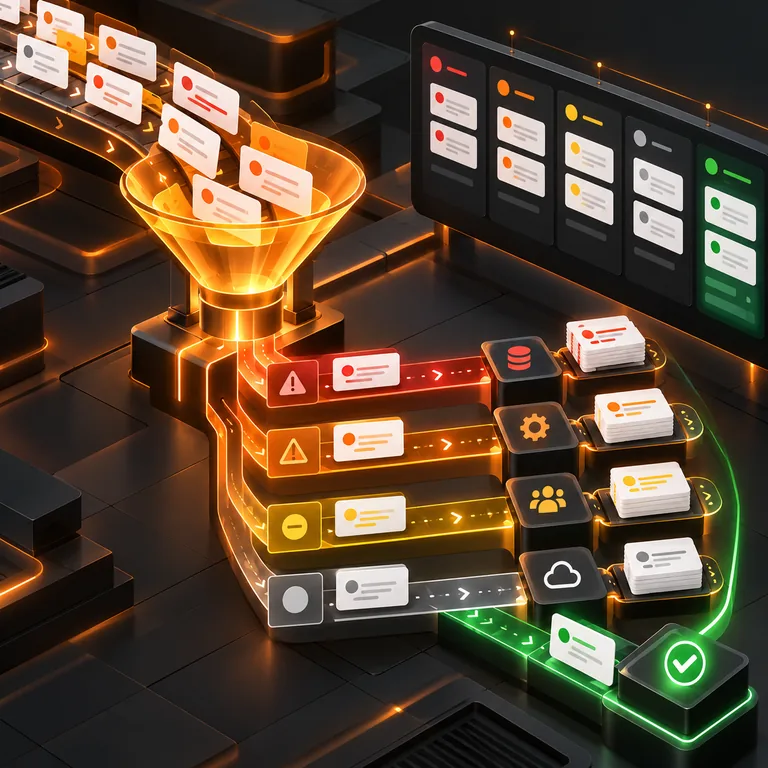
Classify incident reports consistently, preserve impact context, and route the right severity and owner for human review.
More consistent severity, service, and ownership signals across incoming incident reports

Monitor the bridges between systems, isolate recurring error patterns, and route actionable fixes with the evidence teams need.
Earlier visibility into failed, delayed, duplicated, or partially completed integration flows

Turn engineering knowledge into a maintained documentation system with useful context, clear ownership, and reviewable updates.
Less time spent reconstructing how services, integrations, and operational procedures work

Maintain trustworthy knowledge with source-linked audits, focused updates, and human approval across your help center and internal library.
A knowledge base that stays aligned with approved sources

Turn noisy logs into focused, evidence-linked triage queues with service context, ownership, and human review.
Earlier separation of unusual behavior from expected noise

Route password-reset requests through consistent verification, policy checks, and secure human escalation.
Fewer manual handoffs for routine reset requests

Turn security alerts into focused, evidence-linked triage queues with context, ownership, and analyst review.
Less time spent sorting duplicate or low-context alerts

Turn incoming defect reports into prioritized, evidence-linked engineering work with clear ownership and human review.
More complete defect context before investigation begins

Monitor software entitlements, renewals, usage signals, and ownership with evidence-linked recommendations and human approval.
Earlier visibility into renewals, unused seats, and ownership gaps

Monitor service health, dependency context, and operating drift with evidence-linked escalation and human review.
A clearer view of service health across environments and dependencies

Turn vulnerability findings into prioritized, evidence-linked remediation work with asset context, ownership, and human review.
Clearer separation of urgent exposure from incomplete or duplicate findings
Built around your company
Tell us what your team repeats. We will map the process and scope an agent around your rules, systems and review steps.
Book a consultation