Custom AI agent · Finance
AI Accounts Receivable Follow-Up Agent for B2B Software Companies
Give finance teams a clearer view of open invoices and agreed next steps.
Organize B2B software invoice status, aging and follow-up notes from approved sources, with disputes and promise-date exceptions routed for finance review.
- Open invoices grouped by due date and source-reported status
- Customer follow-up history linked to the correct account and invoice
- Disputes, credits and payment promises held for authorized review
Starting at $300 USD/month
Starting price is $300 USD/month for a tailored solution. Your proposal defines the workflow, deliverables and payment terms. Billing, accounting or CRM integrations, invoice volume, data scope, hosting and ongoing support are scoped before work begins.

What is an AI accounts receivable follow-up agent for B2B software companies?
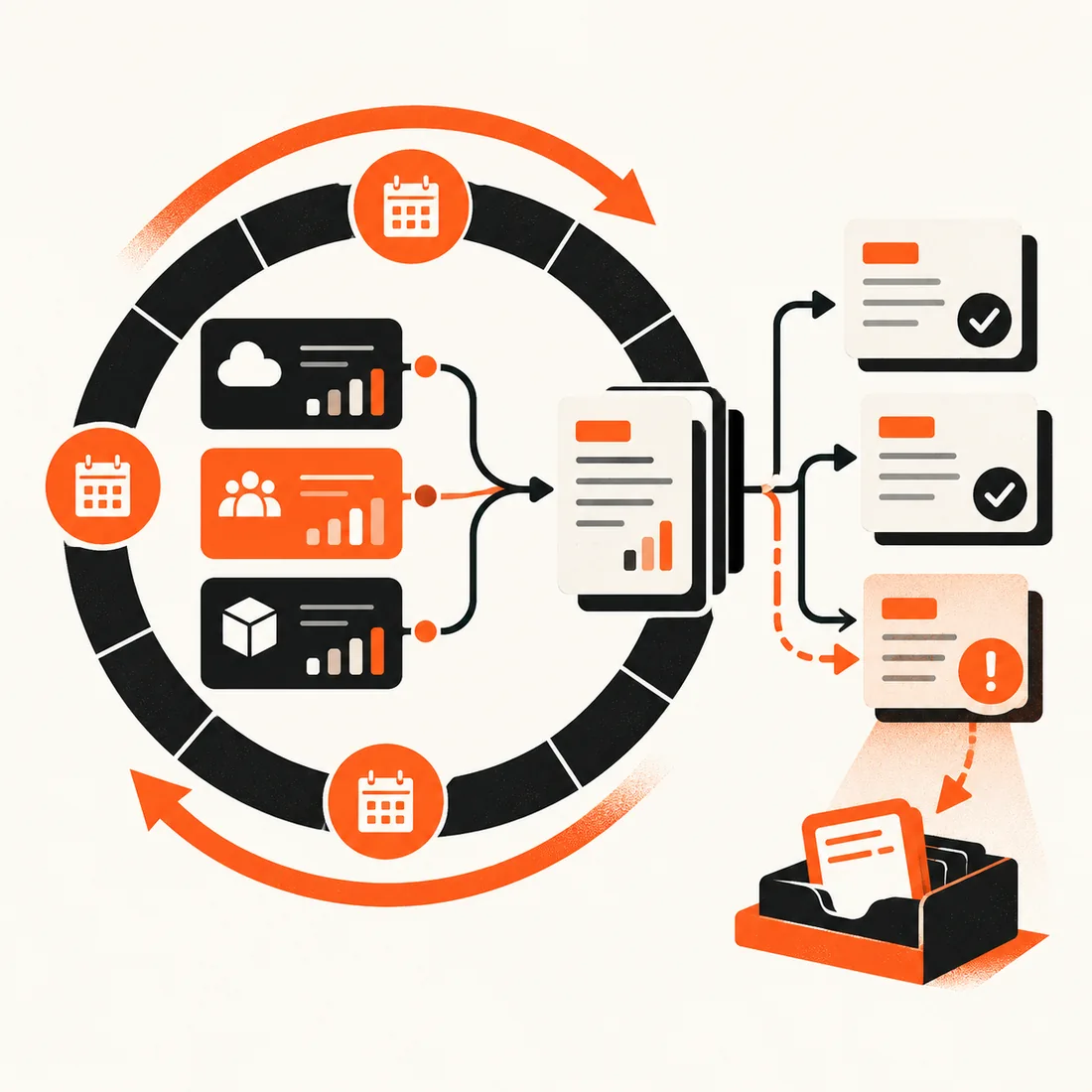
B2B software finance teams reconcile recurring invoices, account records, payment postings, credit notes and customer follow-up across billing, CRM and accounting tools. This agent brings approved invoice and account fields into a receivables workbook, applies the company’s aging and status conventions, and flags mismatches or unresolved customer commitments for an authorized finance owner. It supports review and workflow organization; the company controls all credit, collections, payment and customer-communication decisions.
What it can organize for software receivables
Build an invoice-aging review
Map approved invoice IDs, customer account references, invoice dates, due dates, source-reported balances and aging categories into the team’s workbook. Preserve source and as-of dates; finance staff verify the balance in the billing or accounting system.
Track approved follow-up history
Organize prior contact dates, channel references, owner, response status and agreed next-review date when those fields are present in authorized records. Flag missing context instead of drafting an unsupported claim about payment.
Route disputes, credits and exceptions
Identify records marked disputed, under review, pending credit or linked to an open support issue, and route them to the appropriate owner. The agent does not decide whether a dispute is valid or issue a credit.
Prepare finance-approved work queues
Group open invoice records by aging band, account owner or next-action date using the company’s approved rules. A finance lead reviews priority and approves any customer-facing follow-up.
Where it can help
Reviewing overdue subscription invoices
Combine a dated billing export with approved account-owner and follow-up fields, flag invoices with no recorded next step, and give the finance team a review queue. Staff confirm the balance and account status before contacting a customer.
Reconciling a payment promise
Link a recorded customer commitment and review date to the relevant invoice reference. If the promised date passes or a payment appears in a separate posting file, the agent flags the row for reconciliation rather than marking it settled.
Separating a billing issue from routine follow-up
Surface invoices linked to an open support case, disputed charge, pending credit or contract review so they can be routed to the responsible finance or account owner before any reminder is approved.
How it works
A step-by-step workflow your team can review before launch.
Choose approved billing and account sources
Select dated invoice, payment-posting, CRM and support-case exports in scope. Identify which system is authoritative for account identity, open balance, payment status and customer communications.
Set aging and exception rules
Document aging bands, business-day calendars, dispute and credit statuses, account ownership and rules for suppressing routine follow-up while a case is under review.
Assemble the review queue
Map supported invoice and follow-up fields into the workbook, retain source and as-of references, and flag unmatched accounts, conflicting balances, missing commitments and unresolved cases.
Approve reconciliation and outreach
Finance staff verify balances and payment postings in the accounting system, resolve disputes with the responsible team and approve any reminder or collections action before it is sent.
Built around your business
What we configure
- Billing-platform invoice IDs and approved account references
- Invoice, due-date, as-of date and aging-band definitions
- Payment posting and reconciliation status fields
- Follow-up owner, prior contact and next-review date
- Dispute, credit, support-case and suppression rules
- CRM, billing or accounting exports after permissions and technical review
What we need from you
- Dated sample billing and receivables exports with unnecessary personal data removed
- A documented source of truth for invoice balances, payments and customer account records
- Written aging, business-calendar, dispute, credit and escalation rules
- A named finance owner who can verify balances and approve outreach
- A process to stop routine follow-up while a dispute or payment reconciliation is unresolved
Clear boundaries before launch
What it will not do
This agent organizes accounts-receivable records; it does not debit a customer, charge a payment method, negotiate terms, assess creditworthiness, decide whether an invoice is legally owed, approve a write-off or credit, alter an invoice, report a customer to a credit bureau, threaten legal action, or independently send collection communications. It must not infer payment, delinquency, intent or contract status from incomplete data. Finance staff verify open balances, postings, disputes and customer context in the systems of record and approve any external message. Collection and privacy requirements remain the company’s responsibility.
How success is measured
Compare sampled invoice and follow-up rows with dated billing and accounting sources. Track balance and due-date mismatches, stale snapshots, unmatched account references, unresolved dispute flags, payment promises needing review, duplicate follow-ups and finance correction time. Measure record organization separately from days sales outstanding, recovery rate, churn, customer satisfaction or revenue.
Frequently asked questions
What does an AI accounts receivable follow-up agent do for a B2B software company?
It organizes approved invoice, aging and follow-up records into a finance review queue and flags disputes, mismatches and missing next steps.
Does it automatically email customers or collect payments?
No. It does not charge customers or send collection messages by itself. Finance staff verify the account context and approve any external communication.
How does it handle disputed invoices or open support cases?
It can flag and route records marked disputed, pending credit or linked to an unresolved case. The responsible team decides the outcome, and routine follow-up should pause according to company policy.
Can it confirm that an invoice has been paid?
It can organize source-reported payment-posting fields, but staff reconcile them in the accounting system before changing an invoice’s status or telling a customer it is settled.
Can it choose which accounts to send to collections?
No. It can group records using finance-approved aging rules. Authorized staff determine next steps under the company’s policies and applicable requirements.
What does the $300/month starting price include?
Tranki solutions start at $300 USD/month. The proposal defines the tailored workflow, deliverables and payment terms. Billing, accounting or CRM integrations, invoice volume, hosting and ongoing support are scoped before work begins.
How do we keep invoice follow-up accurate?
Use dated source exports, preserve invoice references, verify balances and postings in the accounting system, route disputes and credits to their owners, and require finance approval before customer outreach.