Custom AI agent · IT & Security
AI Incident Ticket Classification Agent
Turn incident tickets into the right response before urgency gets lost.
Classify incident reports consistently, preserve impact context, and route the right severity and owner for human review.
- More consistent severity, service, and ownership signals across incoming incident reports
- Fewer delays caused by incomplete context, misrouted tickets, or duplicate incident records
- A reviewable classification trail that separates observed impact from assumptions and urgency
Starting at $300 USD/month
Starting price is $300 USD/month for a tailored solution. Your final proposal defines the ticket sources, classification model, integrations, usage, deliverables, hosting, support, and payment terms. Additional channels, languages, or high-volume workflows are scoped before work begins.
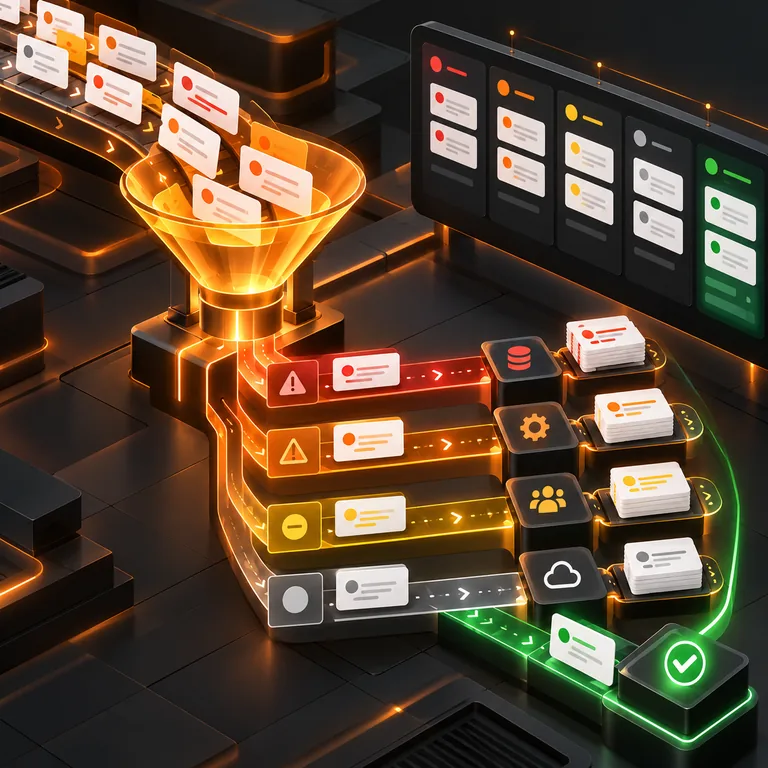
What is an AI incident ticket classification agent?
An AI incident ticket classification agent helps service desks, operations teams, and on-call groups turn unstructured incident reports into consistent first-pass records. It can identify the affected service, symptom, urgency, customer or employee impact, probable category, duplicate signals, and likely ownership; ask for missing details; and route the ticket through the configured incident process. Tranki configures the workflow around your service catalog, severity policy, business impact model, on-call ownership, escalation rules, privacy boundaries, and human review. The agent accelerates intake and coordination; it does not declare the final severity, diagnose root cause, close the incident, or trigger production action without authorization.
What it can classify
Extract incident context
Identify affected services, symptoms, timing, environment, scope, requester impact, business impact, and supporting evidence from incoming reports.
Suggest severity and category
Apply configured impact, urgency, service criticality, and incident taxonomy rules while showing uncertainty and the evidence behind the suggestion.
Detect duplicates and relationships
Compare new reports with active incidents, known issues, and related tickets to help teams link or separate cases without silently merging them.
Route the first response
Recommend the responsible queue, on-call owner, escalation path, and missing questions while preserving the original report for human review.
Where it can help
Service desk incident intake
Give front-line teams a consistent way to classify employee or customer reports before they reach technical responders.
Multi-channel incident triage
Normalize incident submissions from portal, email, chat, monitoring, and support channels into a reviewable operational record.
High-impact incident routing
Surface customer scope, service criticality, urgency, and missing evidence so accountable responders can escalate appropriately.
How it works
A step-by-step workflow your team can review before launch.
1. Define the classification policy
Tranki maps services, incident categories, impact and urgency definitions, severity thresholds, ownership, escalation, privacy, and review responsibilities.
2. Read the incoming report
The agent extracts permitted details, identifies gaps, preserves source wording, and checks related tickets or known issues where approved.
3. Propose classification and route
It suggests category, severity, service, owner, duplicate links, and next questions while labeling confidence and leaving the decision with the responder.
4. Record the reviewed outcome
An authorized owner confirms or corrects the classification, routes the incident, and feeds reviewed decisions into the governance and improvement process.
Built around your business
What we configure
- service catalog, incident taxonomy, impact and urgency definitions, severity thresholds, environments, customer groups, on-call ownership, escalation, and duplicate rules
- connections to approved ITSM, monitoring, alerting, support, collaboration, knowledge, status, and reporting systems using least-privilege access
- intake forms, prompts, languages, channel-specific templates, redaction rules, confidence labels, review queues, notifications, and audit fields
What we need from you
- an incident policy, service and ownership catalog, severity model, representative tickets, escalation paths, privacy and retention rules, and sample reviewed classifications
- authenticated connections to permitted ticket, support, monitoring, alerting, knowledge, collaboration, and reporting sources with access boundaries
- test cases covering vague reports, high-impact incidents, duplicates, outages, security indicators, multilingual submissions, missing service names, and conflicting signals
Clear boundaries before launch
What it will not do
The agent does not declare final severity, diagnose root cause, open or close an incident without authorization, page teams outside policy, disclose sensitive customer or security data, or execute production changes. It should not infer impact from emotion alone, treat a duplicate suggestion as fact, classify a security incident as routine support, or merge records without review. Security, safety-critical, regulatory, contractual, and high-impact customer incidents require the appropriate human and specialist process.
How success is measured
Track classification agreement, time to responder-ready ticket, routing accuracy, severity correction rate, duplicate-link precision, missing-context reduction, escalation appropriateness, false-high and false-low rates, source-evidence completeness, privacy incidents, and human correction rate. Sample classified tickets against the reviewed incident record to check observed facts, hypotheses, impact, urgency, and ownership.
Frequently asked questions
What does an AI incident ticket classification agent do?
It extracts incident context, suggests category and severity, identifies likely ownership and related tickets, asks for missing details, and routes a reviewable first-pass record.
Does it decide the final severity automatically?
No. It can apply your configured rules and make a suggestion, but the authorized responder remains responsible for confirming severity and impact.
Can it classify incidents from chat or email?
Yes, when those channels are approved and connected. It can normalize their content into the configured incident intake structure.
Can it detect duplicate incident tickets?
It can compare reports with active incidents and known issues to suggest relationships. A human should confirm whether records should be linked or kept separate.
How does it handle possible security incidents?
It can use configured indicators to flag and route the case to the security process rather than treating it as routine service support.
Will it page the on-call team?
Only through an explicitly approved notification workflow. The policy should define thresholds, ownership, escalation, and the required review.
What is included in the $300/month starting price?
The starting price covers a scoped, tailored solution. The final proposal defines ticket volume, channels, integrations, deliverables, support, hosting, and payment terms.